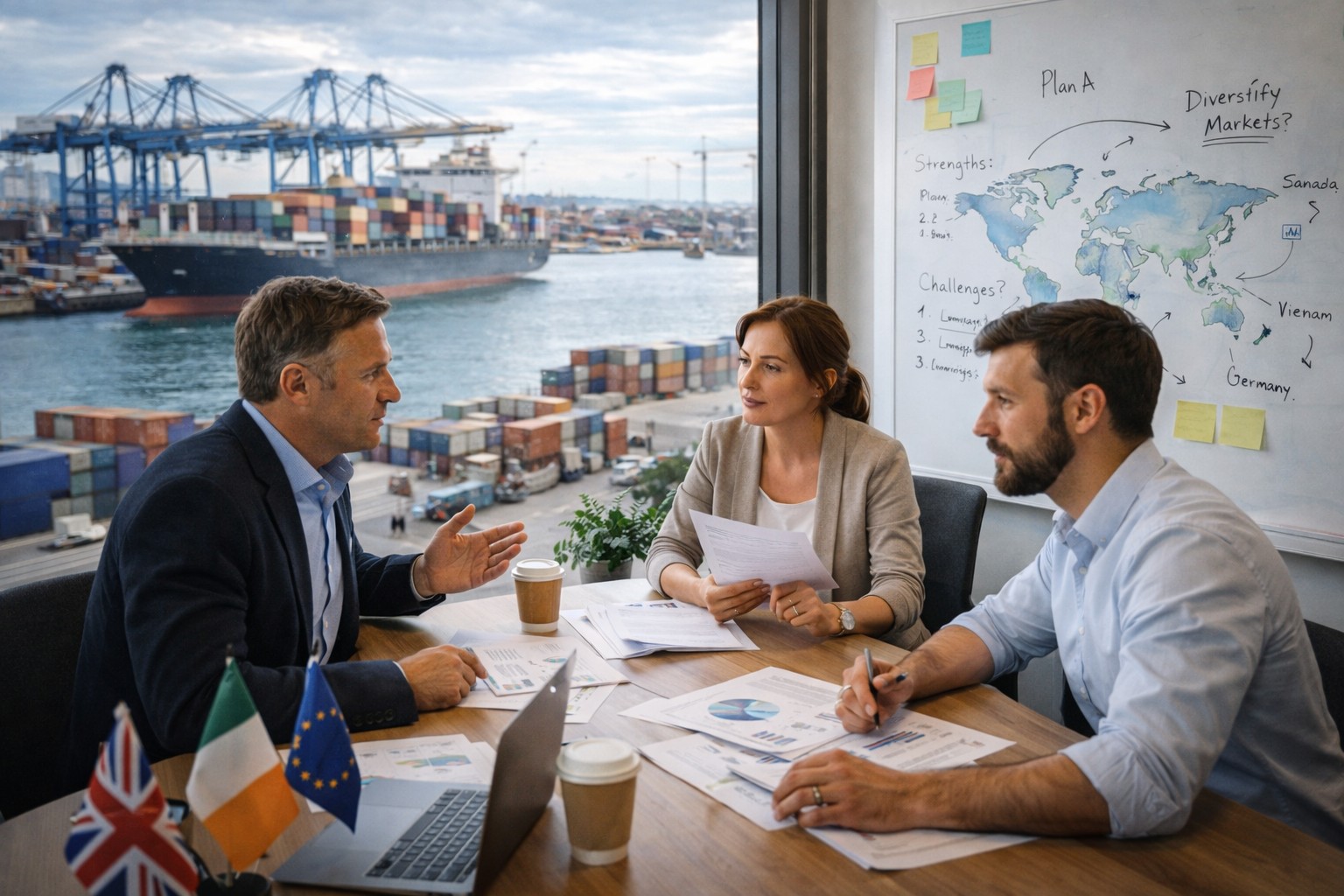
What if a medium-sized business in Dublin could export as seamlessly as any European multinational?

International trade drives economic growth, innovation, and job creation — yet its benefits are unevenly distributed. Small and medium-sized enterprises (SMEs) account for roughly 99% of firms and a majority of employment in advanced economies, but their share of export value remains disproportionately low compared with larger enterprises. This imbalance is not due to lack of ambition or quality — it reflects structural barriers that have historically favored large, resource-rich firms. Today, however, digital innovation is fundamentally reshaping global trade and creating real opportunities for SMEs to compete on a global stage.
SMEs: The Backbone of the Economy, Underused in Trade
Across OECD countries, SMEs represent around 99% of all firms and generate 50–60% of value added on average in the economy. They are also a main source of employment in most countries. OECD
In the European Union, small enterprises alone constituted 99% of all businesses in 2022, employing nearly 48% of all workers, and generating €11.9 trillion in turnover. European Commission
Despite their numerical dominance, SMEs contribute far less to trade relative to large firms. In the EU, while SMEs account for the vast majority of exporting firms by number (98%), they account for a much smaller share of export value, with large enterprises representing around 59% of export value. European Commission
The Structural Barriers That Hold SMEs Back
Why are SMEs underrepresented in international trade? The answer lies in the hidden costs and risks embedded in traditional trading systems:
1. Complexity and Cost
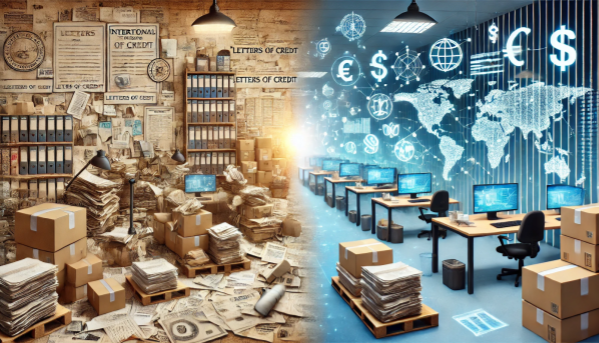
Trade documentation, compliance requirements, customs formalities, and payment terms are traditionally manual, fragmented, and opaque. For a large enterprise with dedicated legal, finance, and logistics teams, these are operational overheads. For an SME, they can be prohibitive — consuming time, money, and scarce managerial attention.
2. Limited Access to Finance
Trade often requires upfront capital for production, inventory, and logistics. Yet 40% of formal SMEs are credit-constrained, with a significant portion unable to access the financing they need. World Bank
3. Risk of Non-Payment
For many SMEs, cross-border transactions carry high counterparty risk, and mechanisms to mitigate this (like letters of credit or credit insurance) are costly and may be unavailable without strong banking relationships.
4. Uneven Digital Adoption
Digital tools can reduce friction, but smaller firms are less likely to be fully digitalised across all business functions, particularly in trade and finance, compared with larger enterprises. Wikipedia
These factors combine to create a bias in favor of scale. While bigger firms can absorb delays, mistakes, and costs, SMEs must manage them carefully — otherwise each export opportunity can feel like a gamble.
A Clear Gap: Participation vs. Value
Most SMEs aspire to sell internationally, but fewer succeed. Surveys show that only about one-third of SMEs have exported goods or services at least once. European Central Bank
In the UK, for example, only 9% of SMEs actively export goods or services, with another 15% participating indirectly through supply chains of exporting firms. GOV.UK
Across markets, the share of export revenue generated by SMEs remains modest despite their numerical dominance in exporting categories. This diverging pattern — many SMEs exporting, but each contributing relatively little value — underscores the persistent structural disadvantage SMEs face when scaling internationally.
The Hidden Barrier: Administrative and Procedural Costs
While tariff barriers have declined in many regions over the past decades, non-tariff barriers — the costs associated with documentation, compliance, and administrative procedures — have grown in relative importance. Studies suggest these procedural costs can be equivalent to tariffs of 100–200% for small exporters in some contexts. OECD
Research indicates that reducing the time it takes SMEs to comply with export procedures to the median level enjoyed by larger firms could increase the share of SME exports by up to 20%. World Trade Organization
This means the barrier is not only financial but also structural — rooted in inefficiencies that disproportionately penalise smaller, resource-limited traders.
Digital Innovation: Lowering the Barrier to Entry
The good news is that trade is undergoing a transformation. Digital platforms are reducing complexity, amplifying transparency, and automating many of the tasks that once required specialist expertise or manual intervention.
1. Structured Digital Trade Data
Platforms now capture trade data in machine-readable formats, allowing faster validation, fewer errors, and seamless transfer of information across customs, logistics, and finance systems.
2. Embedded Business Logic
Instead of relying on external consultants to interpret trade rules and compliance matrices, modern systems guide SMEs through processes with embedded logic — reducing reliance on specialist knowledge.
3. Modern Payment Rails
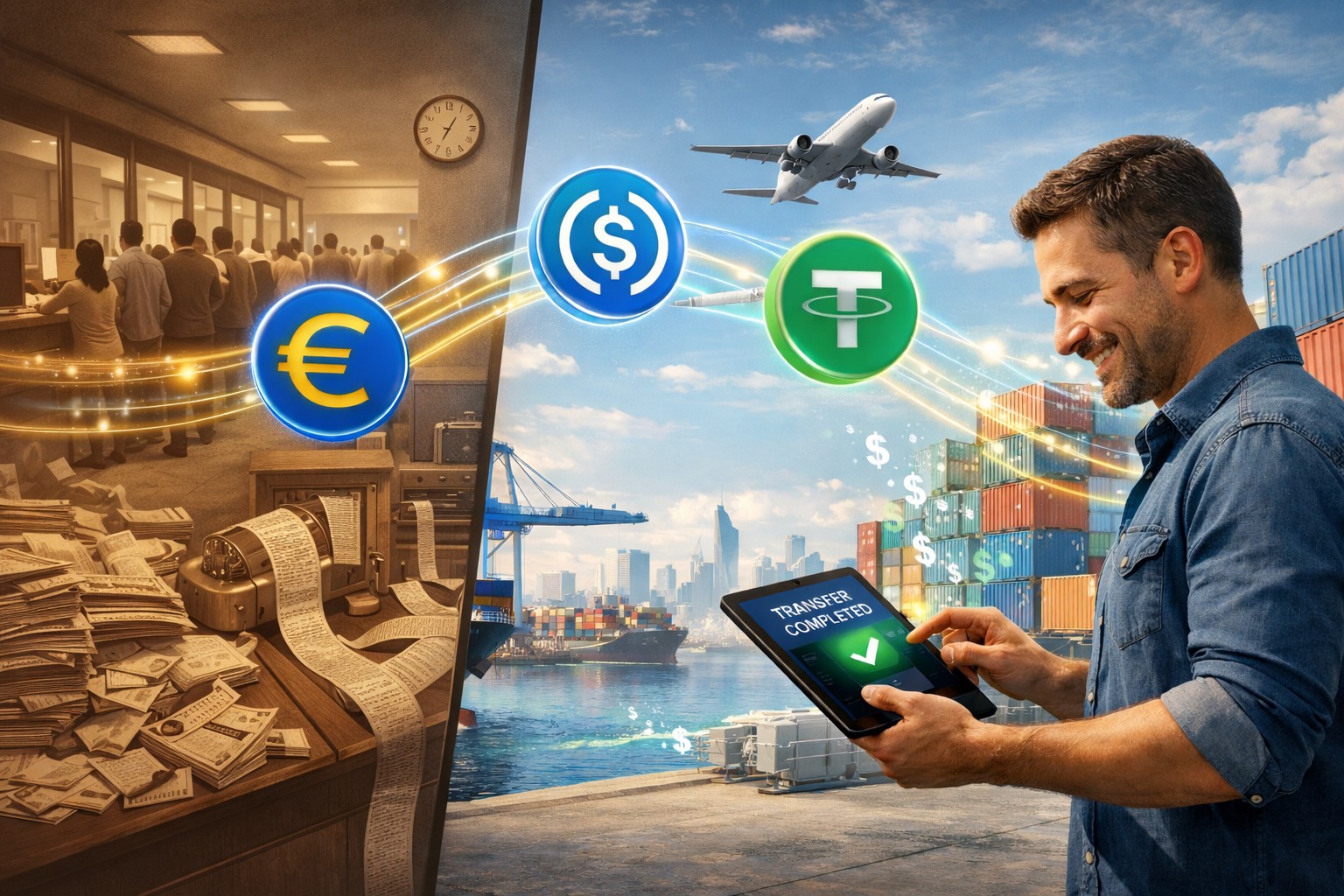
Traditional cross-border payments can be slow and opaque, often taking days and involving several intermediaries. Newer payment solutions — including instant rails and regulated digital assets — dramatically improve settlement speed and transparency, which is crucial for SME cash flow.
4. Built-In Trust Mechanisms
Trust is the backbone of trade, and digital platforms democratise it by embedding verification, standardised terms, and conditional settlements directly into the workflow — lowering counterparty risk for SMEs.
How iTradeDigital Unlocks Global Trade for SMEs
At the frontier of this transformation is iTradeDigital — a digital trade platform designed specifically to level the international trade playing field for SMEs.
Rather than merely digitising old processes, iTradeDigital is reimagining trade from the ground up:
Simplified Trade Workflows
iTradeDigital generates structured, compliant trade documentation automatically, so SMEs spend less time on paperwork and more time growing their business.
Guided Trade Execution
Through step-by-step workflows embedded with global trade logic — including Incoterms, contract terms, and compliance checks — SMEs can confidently transact without needing specialised trade expertise.
Digital First Payments
The platform supports access to traditional banking rails and modern settlement mechanisms such as Stablecoins that improve cash flow and reduce payment risk — two of the biggest obstacles for SMEs entering international markets.
Aligned Incentives and Reduced Risk
By embedding trust mechanisms and clear milestones, iTradeDigital reduces uncertainty and creates a fairer negotiation environment between buyers and sellers.
In essence, iTradeDigital doesn’t just connect SMEs with new markets — it equips them with tools, clarity, and confidence to trade internationally on terms that were once only available to larger enterprises. For the first time, SMEs can participate in global trade not as apprentices but as equals.
A More Inclusive Future for Trade
Global trade is evolving. The future will not belong solely to multinationals with balance sheets large enough to absorb friction and risk. It will belong to those who can navigate complexity with agility — and to the platforms that empower them.
SMEs deserve a seat at the international trade table, not because they are small, but because their success strengthens economies, creates jobs, and fosters innovation.
With digital trade platforms like iTradeDigital, that future is already beginning to take shape.
Contact an iTD Trade Management Specialist to learn more.